Crystal study
Claude and Codex recreated the same seven-second crystal animation. Compare each live render with the original.
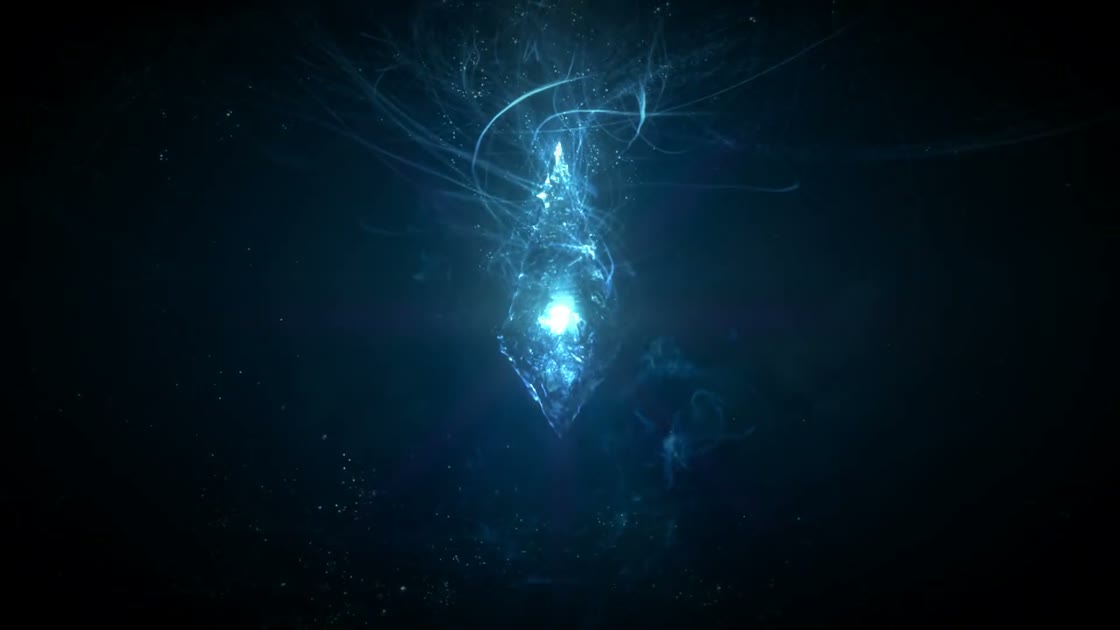
Original prompt
Plain text<path-to-video.mp4> Recreate the entire attached video as a live, animated webpage. Use the video as the visual source of truth. The goal is to reproduce this specific scene as closely as possible, including its crystal, material, lighting, background, atmosphere, and motion. A broadly similar blue crystal is not enough. The supplied video is 1920 × 1080 at 30 fps and lasts 7.467 seconds. Render the scene live in the browser. Do not substitute video playback or use extracted reference frames as the rendered scene. The reference video may appear separately in a comparison viewer. The crystal must be viewable from different angles. Allow me to drag to orbit the camera around it, scroll or pinch to zoom, and shift-drag to pan. Include a Reset control that restores the camera and framing used for comparison with the reference. Camera interaction must work while playing and while paused. The crystal's own animated rotation must remain independent of these controls. What matters visually 1. Crystal shape and glass Match the silhouette, proportions, apparent depth, and visible faces. The material should look clear and glassy, with convincing reflections and refractions. Preserve the rich blue color and bright, sharp highlights. Some larger areas look smooth and connected even though the crystal has an irregular surface. Avoid a cloudy appearance, large unexplained dark areas, a hollow-looking center, or a collection of disconnected shards and bright edges. Study the reference closely enough to distinguish visible surfaces from reflections inside the crystal. The crystal material is a primary acceptance criterion. Keep iterating until it is very close to the reference, rather than stopping at a recognizable approximation. 2. Internal light and the reveal The scene initially brightens through a fairly narrow column near the crystal's middle. The surrounding scene should not become broadly bright too early. The light inside the crystal grows brighter over time. The surrounding glow must feel caused by that internal light and follow its timing. Match the clearly sourced, round internal light and its luminous appearance. As the glow spreads outward, match the broad horizontal oval around the crystal. Avoid a tall, vertical glow or unrelated background brightening. Preserve deep, rich blues while allowing selected highlights to become intensely bright. Do not replace this with a uniformly pale cyan wash. 3. Crystal motion The source crystal slowly turns left. Observe the amount and timing of that turn across the full video and match it. Do not invent a rotation amount or settle for barely visible movement. Compare how identifiable faces and highlights move at several times. Also inspect the subtle movement near the top and bottom of the crystal. The result must work in motion, not only as a still image. 4. Upper wisps and trails The upper trails feel wispy and gaseous. They form a loose, web-like area around and above the crystal. Match their density, visibility, curvature, softness, and movement. Avoid rigid laser-like lines, a sparse handful of arcs, or an excessively dense tangle. 5. Dust, specks, and smoke The source particles have coherent movement. Some form sparse strands rather than looking uniformly scattered at random. Pay particular attention to the moving specks below the crystal and in the lower-left part of the frame. Their motion should be visible. Match the smoke's placement, softness, density, and movement. Bright glow washes out nearby stars and specks. They remain more visible around its perimeter. Do not leave equally visible stars across the bright center. How to work and compare - Inspect the full video before choosing an implementation. - Examine enlarged views of the glass, internal light, upper wisps, and lower particles. - Compare synchronized frames through the early reveal, middle, and ending. Also compare full-speed playback and slow playback. - Use the reference camera and matching scale for fidelity checks. Do not hide differences with a different camera, crop, or exposure. - Build, render, inspect, and revise. Use the visible differences to decide what to change next. - Fix the largest mismatches first. Recheck the rest of the scene after each substantial change. - Preserve a known-good version so experiments do not silently replace a better result. - Continue through meaningful iterations without waiting for me to say "continue" after every attempt. - Do not call the work complete merely because it improved, ran for a long time, or passed technical checks. Judge the actual appearance and motion. - Be honest about remaining differences. Do not claim a visual match or my approval without evidence. Review page Provide a minimal, clear comparison page: - Original video on the left. - Current live render on the right. - Equal display sizes, matching initial framing, and synchronized playback. - Shared play/pause, restart, playback speed, and scrubbing. - Orbit, zoom, and pan controls for the live render. - Reset to restore the reference camera. - A way to enlarge matching regions of both views for detailed comparison. - Clear identification of the current version. Keep the interface restrained and simple. Avoid decorative cards, excessive explanations, and a confusing collection of old versions. Implementation and delivery - Choose a clean, practical browser rendering approach. Three.js is an option. - Keep the code understandable and easy to edit. - Aim for smooth playback and sensible resource use. Measure performance rather than guessing. - Avoid elaborate infrastructure unless needed for the visual result. - Provide the source and clear instructions to open the result. - If the result needs a local server, explain that requirement and verify the page works before handing it over. - Keep a concise record of what is finished, what still differs, and the next concrete action. Avoid a long transcript of experiments. The intended outcome is a beautiful, live recreation that closely matches the reference throughout the video, especially its clear glass, internally driven light, slow leftward rotation, and coherent atmospheric motion. It must also remain convincing when I orbit and zoom to inspect the crystal.